When a new batch of refrigeration units repeatedly failed the final pressure test, the production manager immediately
suspected the brazing rods.
The joints looked clean. The filler metal had melted evenly. Nothing appeared unusual. Yet nearly one out of every ten
copper-to-aluminum joints developed leaks during helium leak testing.
Replacing the brazing rods didn't solve the problem. Changing torch operators didn't help either. The factory was losing
production time, increasing rework costs, and struggling to identify the real cause.
Situations like this are more common than many manufacturers realize.
At XINXIN WELDING, we frequently receive inquiries from customers facing similar challenges. While every production
line is different, the root causes are often surprisingly similar.
Looking Beyond the Brazing Rod
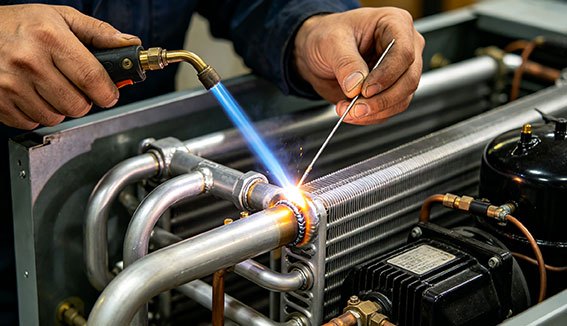
After reviewing the customer's brazing process, one detail immediately stood out. Operators were directing the flame
toward the flux-cored brazing rod instead of heating the copper and aluminum components first.
The filler rod melted quickly, creating what appeared to be a complete weld. However, because the base metals had
not reached the proper brazing temperature, the molten filler alloy could not fully wet the joint surfaces or flow through the
joint clearance by capillary action. The joint looked acceptable but contained microscopic voids that later became leakage
paths during pressure testing.
Engineer's Note
Never melt the filler rod directly with the flame. Heat the base metals first. The brazing alloy should melt from the heat
stored in the workpiece, ensuring complete wetting and proper capillary flow.
Why Copper and Aluminum Behave Differently
Copper conducts heat extremely quickly, while aluminum has a much lower melting point and is covered by a tenacious
oxide layer. This creates a narrow processing window. Too much heat may damage the aluminum before the filler flows. Too
little heat prevents proper metallurgical bonding.
A Small Process Change That Made a Big Difference
The customer cleaned every joint thoroughly, changed the heating sequence, and heated both base metals evenly
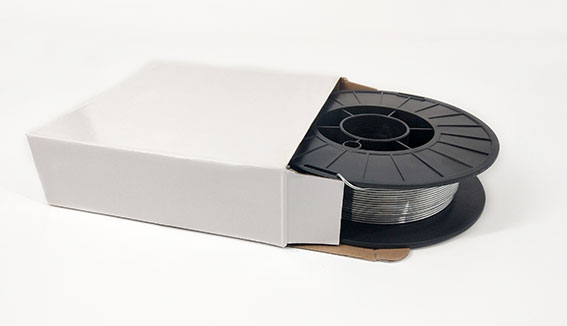
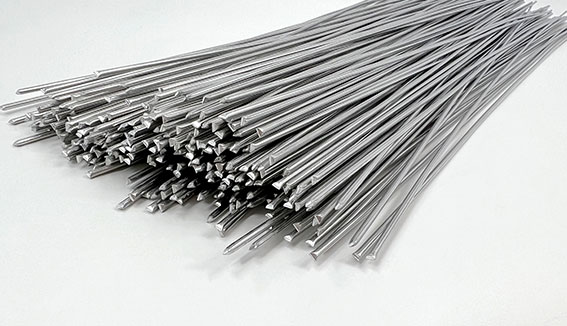
before feeding the flux-cored brazing rod. Once the joint reached the correct brazing temperature, the filler metal flowed
naturally into the joint by capillary action, producing dense, uniform brazed joints. Leak failures dropped dramatically.
Engineer's Note
Successful brazing is not about applying more heat. It is about applying heat evenly, in the correct sequence, and at
the proper temperature.
What Every Manufacturer Can Learn
Most copper-to-aluminum brazing defects are caused by five preventable issues:
• Heating the filler rod instead of the joint
• Overheating aluminum
• Poor surface preparation
• Feeding the filler alloy too early
• Uneven torch movement
Why Flux-Cored Brazing Rods Simplify Production
Flux-cored brazing rods eliminate the need for separate flux application, improve consistency, reduce operator error,
and produce strong, leak-resistant joints when used with the correct brazing process.
How XINXIN WELDING Supports Manufacturers
At Tongling Xinxin Welding Materials Co., Ltd., we believe successful brazing comes from combining high-quality filler
materials with proven process control. Our engineering team works with customers to reduce defects, improve productivity,
and optimize copper-to-aluminum brazing applications.
Conclusion
Our goal is not simply to supply brazing consumables. We help manufacturers solve brazing problems and build stronger,
cleaner, and more reliable brazed joints.