Hydraulic Power Units (HPUs) serve as the primary energy source for a vast array of heavy machinery, industrial production lines, and emergency drainage systems. Operating as self-contained systems that include a motor or engine, a fluid reservoir, hydraulic pumps, and directional control valves, these units generate the oil flow and pressure required to drive hydraulic actuators. Selecting the appropriate configuration depends strictly on the application environment, spatial constraints, and specific load requirements.
For engineering procurement managers and B2B industrial buyers, understanding the structural differences and performance parameters of individual configurations is vital to achieving optimal operational efficiency. This technical overview analyzes the three primary categories of Hydraulic Power Units—mini, industrial, and mobile configurations—with a focus on how specialized manufacturers like Selamhyd engineer these systems to meet heavy industrial standards.
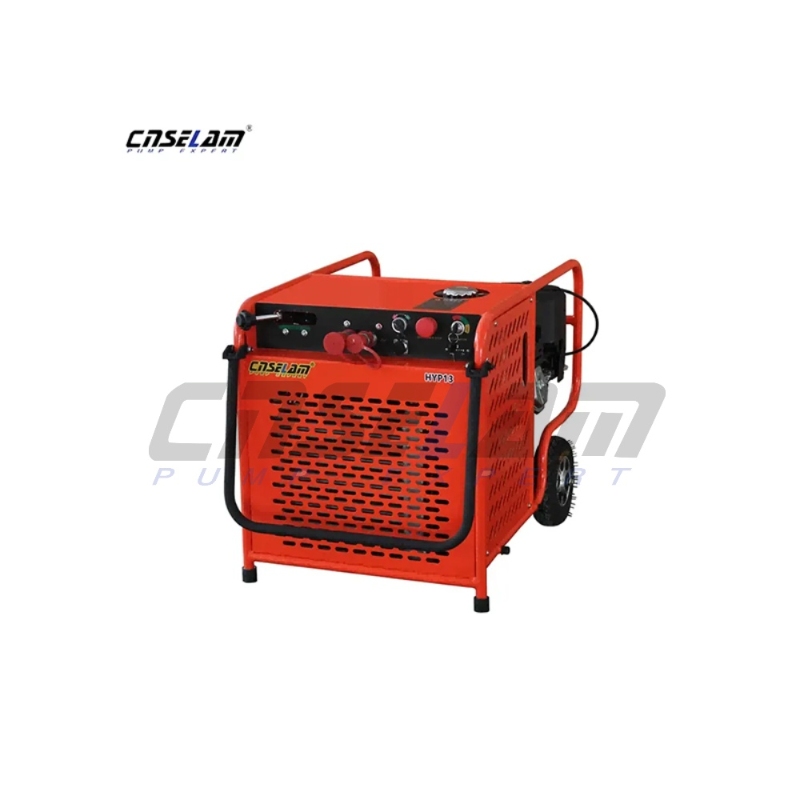
1. Mini Hydraulic Power Units (Compact Configurations)
Mini hydraulic power units are engineered specifically for applications where space is severely constrained and intermittent mechanical force is required. These units usually feature a compact footprint, integrating a fractional-horsepower AC or DC motor directly with a small gear pump and a steel or plastic reservoir block.
In standard industrial environments, mini HPUs are deployed in automotive lifts, dock levelers, material handling lifters, and small security gates. Due to their limited reservoir capacity, these units are not intended for continuous duty cycles, as fluid temperature rises rapidly under sustained operations. Instead, they rely on precise, short-duration pressure delivery to execute highly repetitive mechanical tasks with maximum space efficiency.
2. Industrial Hydraulic Power Units (Stationary Configurations)
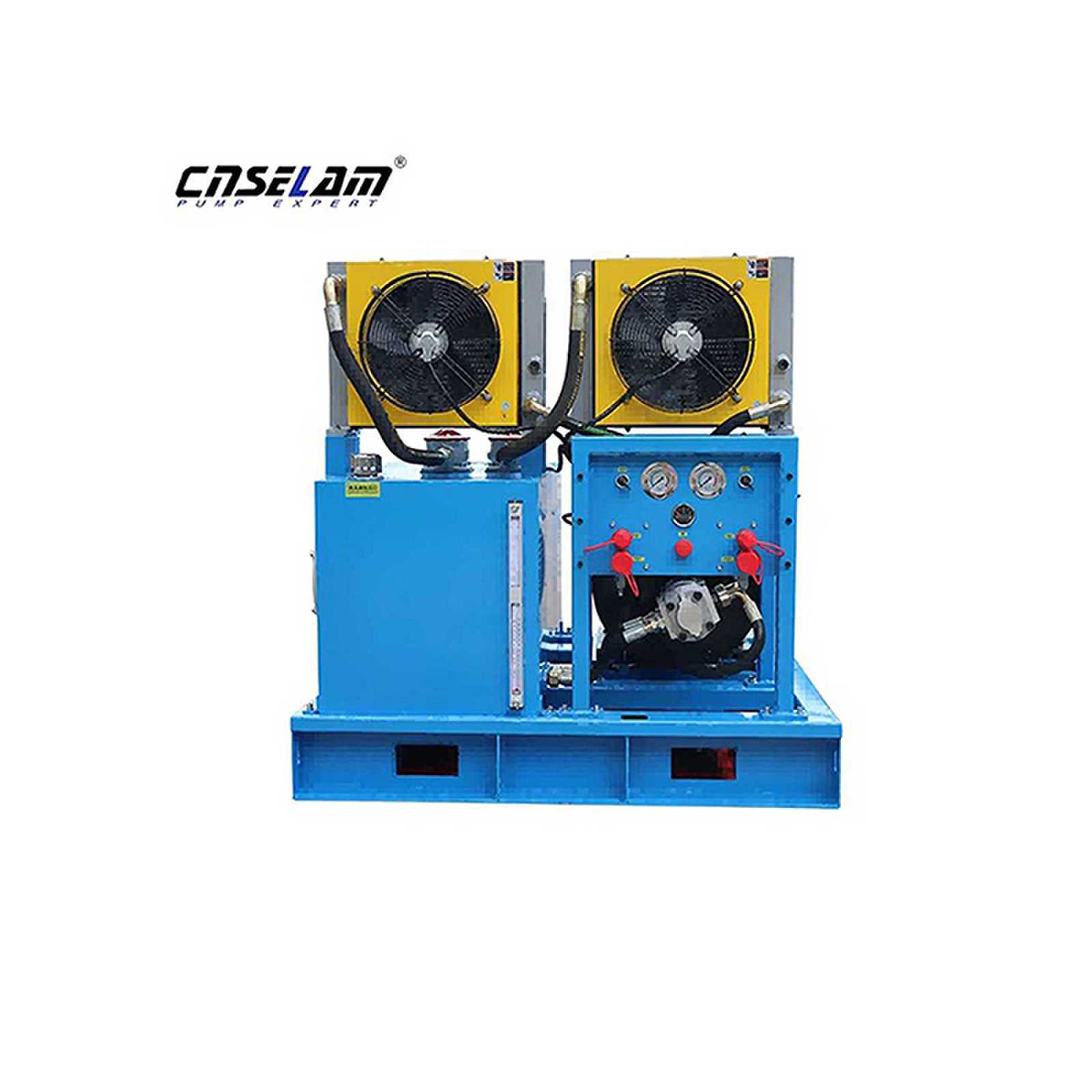
Industrial configurations represent the backbone of manufacturing plants, processing facilities, and deep-well operations where continuous-duty performance and precise pressure control are continuous requirements. Unlike compact models, industrial systems are built on stationary frameworks designed to handle extreme operational stresses over extended periods.
Electric Hydraulic Power Unit Systems
Within the industrial category, the Electric Hydraulic Power Unit is the most prevalent configuration. Utilizing heavy-duty three-phase induction motors or high-efficiency permanent magnet synchronous motors, these units deliver stable hydraulic power to high-pressure lines. Stationary electric HPUs allow for extensive customization, accommodating multi-pump arrays, advanced proportional valve stacks, and sophisticated filtration loops.
Selamhyd integrates advanced digital monitoring into its industrial electric power packs. These configurations include dedicated oil temperature sensors, fluid level switches, and electronic pressure transducers that feed data directly into plant PLC networks. This ensures that the system maintains optimal fluid viscosity and prevents cavitation during continuous industrial manufacturing cycles.
3. Mobile Hydraulic Power Units (Heavy-Duty Field Configurations)
For municipal flood control, emergency drainage, mining extraction, and civil construction, stationary infrastructure is unavailable. Mobile hydraulic power units provide high-output hydraulic energy in remote or rugged environments, often driving high-capacity hydraulic submersible pumps or large-scale rescue tools.
Skid-Mounted Hydraulic Power Unit Systems
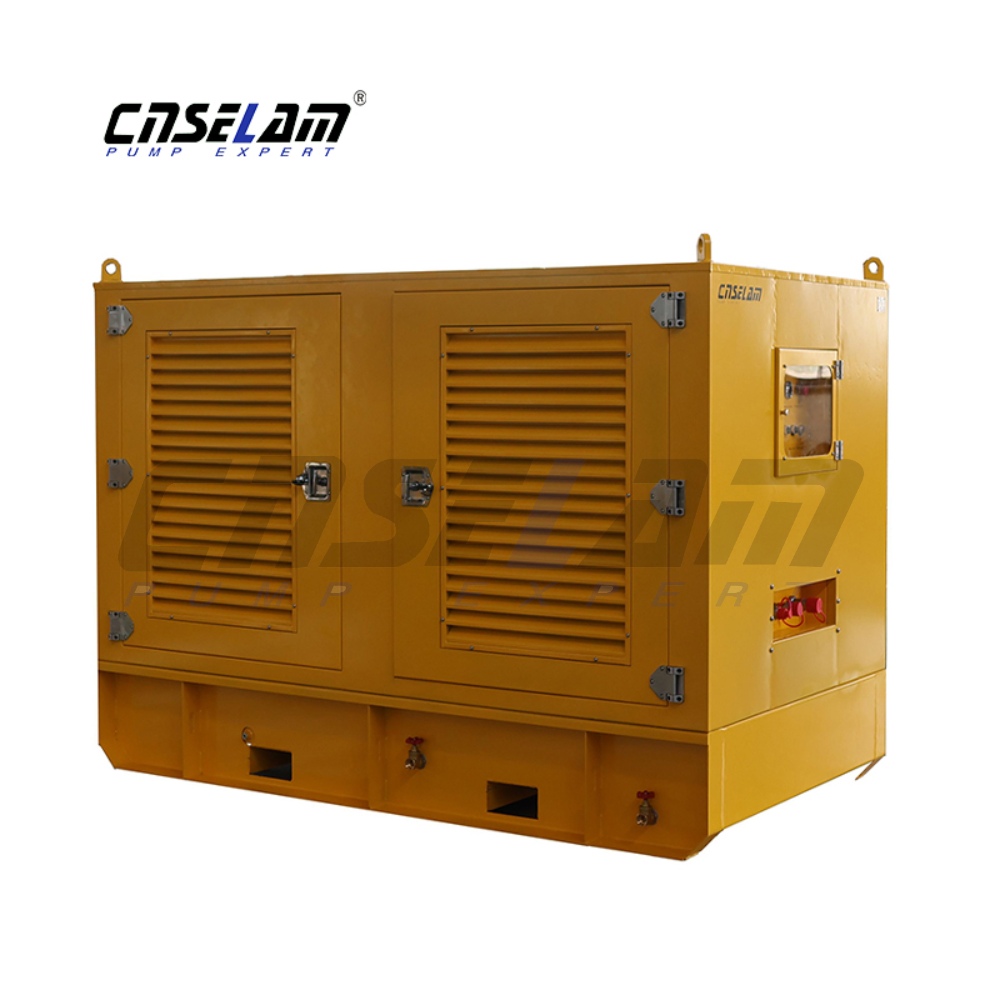
A Skid-Mounted Hydraulic Power Unit is constructed within a heavy-gauge, structural steel framework featuring integrated forklift pockets and heavy lifting eyes. This rigid structural enclosure protects critical internal components—including the internal combustion diesel engine or high-capacity electric motor, variable displacement piston pumps, and large fluid reservoirs—from physical damage during transport and deployment.
Skid-mounted configurations are highly favored in industrial infrastructure projects and offshore operations where equipment must be securely anchored onto flatbed trucks, barges, or oil platforms. The robust structural layout minimizes vibration, ensuring stable alignment between the prime mover and the hydraulic pump even under maximum working pressures.
Trailer-type Hydraulic Power Unit Systems
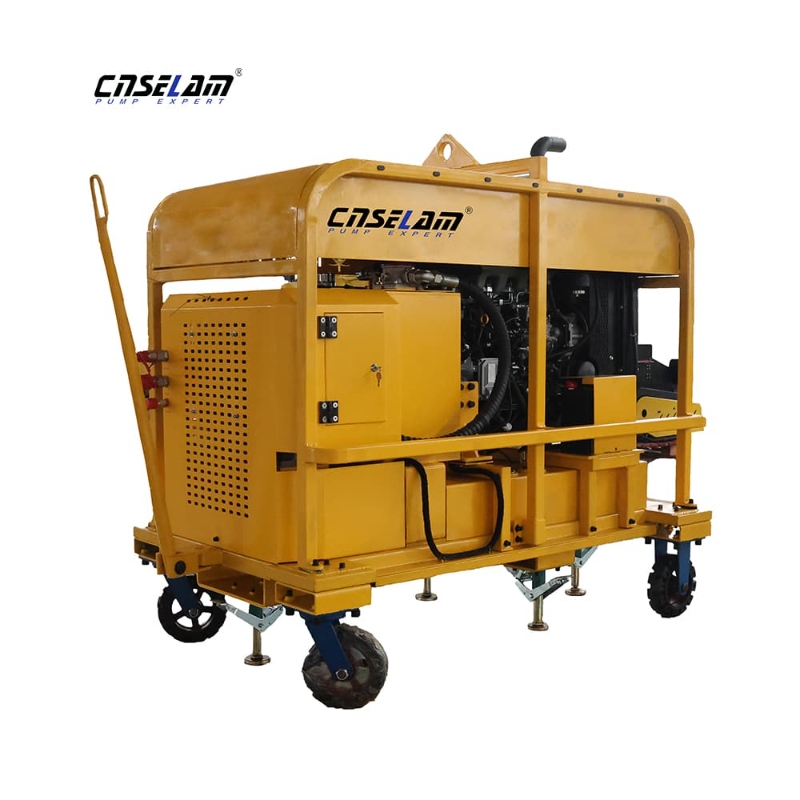
When rapid deployment and maximum mobility are the primary operational criteria, the Trailer-type Hydraulic Power Unit represents the industry standard. Mounted onto a heavy-duty, multi-axle highway or field trailer chassis complete with braking systems and leveling jacks, these mobile power plants can be towed directly to disaster zones or remote construction sites behind standard utility vehicles.
Selamhyd specializes in manufacturing high-capacity trailer-type power units designed specifically to drive high-flow hydraulic axial flow pumps and slurry pumps for emergency dewatering. These units are typically powered by water-cooled multi-cylinder diesel engines, enabling self-sustained operation independent of the local electrical grid. Enclosed in weatherproof, sound-attenuating canopies, they provide reliable field performance under severe meteorological conditions.
Technical Specification and Application Matrix
To assist procurement technical teams in identifying the optimal equipment configuration, the following engineering matrix outlines the technical parameters and target applications across different design classes:
| HPU Configuration | Primary Power Source | Mobility Class | Core Industrial Applications |
| Mini Hydraulic Power Unit | AC / DC Electric Motor | Fixed / Stationary |
Dock levelers, light material handling, automotive lifts, small gates |
| Electric Hydraulic Power Unit | 3-Phase / PM Electric Motor | Stationary Plant |
Industrial automation lines, heavy manufacturing presses, mining systems |
| Skid-Mounted Hydraulic Power Unit | Diesel Engine / Electric Motor | Semi-Mobile (Crane/Forklift) |
Offshore drilling, modular construction sites, continuous structural bypass |
| Trailer-type Hydraulic Power Unit | Multi-Cylinder Diesel Engine | Fully Mobile (Towed) |
Municipal emergency flood control, high-volume drainage, disaster rescue |
Engineering Considerations for Heavy Industrial Selection
When evaluating Hydraulic Power Units for large-scale operations, matching technical parameters to environmental realities is essential:
-
Thermal Management: Industrial and mobile units operating continuously require efficient cooling systems. Air-to-oil heat exchangers or water-cooled cooling loops must be integrated to keep fluid temperatures within the optimal working range.
-
System Pressure and Flow Rate: Matching the pump displacement (L/min) and maximum working pressure (MPa) to the requirements of the hydraulic submersible pump or actuator prevents energy loss and premature component failure.
-
Environmental Protection: Field-deployed equipment requires IP55 or higher electrical ratings, anti-corrosion coatings, and heavy-duty dust filtration systems to guarantee operational longevity in maritime or desert conditions.
Selecting the correct type of hydraulic power infrastructure determines the ultimate efficiency and reliability of your mechanical systems. Whether implementing stationary Electric Hydraulic Power Unit frameworks within an automated factory environment, or deploying heavy-duty Skid-Mounted or Trailer-type Hydraulic Power Unit assemblies for high-flow emergency drainage, precise technical alignment is crucial.
As a professional industrial equipment manufacturer, Selamhyd delivers engineered hydraulic power units tailored to meet the demanding requirements of global field operations. Contact our application engineering team today to review technical drawings and request customized project quotes.
A leaking truck fuel tank is one of the most common repair challenges faced by commercial vehicle workshops. Whether caused by vibration fatigue, corrosion, impact damage, or pinhole defects, fuel tank leaks must be repaired quickly and permanently to ensure vehicle safety and minimize downtime.
However, many repaired fuel tanks begin leaking again after only a short period of service. While welding technique is often blamed, the root cause is frequently the selection of unsuitable brazing materials.
At XINXIN WELDING, we believe that long-lasting fuel tank repairs depend on both proper welding procedures and high-quality brazing consumables.
Why Do Fuel Tank Repairs Fail?
· Constant Vehicle Vibration: Heavy-duty trucks experience continuous cyclic stress that can cause weak or porous welds to crack over time.
· Thermal Expansion and Contraction: Daily temperature changes generate repeated expansion and contraction, increasing stress around repaired joints.
· Fuel Exposure: Poorly bonded or porous welds may eventually allow fuel seepage during long-term service.
· Thin-Wall Tank Construction: Thin steel sheets require controlled heat input and suitable filler metals to avoid distortion or burn-through.
The Importance of Selecting the Right Brazing Rod
· Excellent fluidity for complete crack filling.
· Superior wettability for strong metallurgical bonding.
· Dense, low-porosity welds for improved sealing.
· High resistance to vibration fatigue.
· Stable mechanical properties through consistent alloy composition.
Common Problems Caused by Low-Quality Brazing Rods
· Poor filler metal flow
· Insufficient penetration
· Excessive porosity
· Slag inclusions
· Weak metallurgical bonding
· Premature cracking after vibration
· Repeated fuel leakage requiring costly rework
XINXIN WELDING Fuel Tank Repair Solutions
· Excellent fluidity for complete crack filling.
· Strong wettability for improved bonding.
· Dense weld structures with enhanced sealing performance.
· Stable alloy composition for consistent welding quality.
· Good resistance to vibration fatigue.
· Reliable long-term sealing performance for truck fuel tank repairs.
Typical Applications
· Truck diesel fuel tanks
· Commercial vehicle fuel tanks
· Steel fuel tank cracks
· Pinhole leakage
· Automotive repair workshops
· Heavy equipment maintenance
· Fleet maintenance services
Choose Materials That Deliver Long-Term Reliability
· A successful fuel tank repair is measured not by how quickly the leak stops today, but by how long the repair continues to perform under real operating conditions.
· Selecting a high-quality brazing rod helps create dense, durable, vibration-resistant joints that reduce repeat leakage and improve repair efficiency.
· At XINXIN WELDING, we are committed to providing professional brazing materials that help repair technicians achieve stronger, cleaner, and longer-lasting fuel tank repairs.
How XINXIN WELDING Helped a Collision Repair Workshop Reduce Panel Distortion and Better Preserve Corrosion
Protection
Introduction
Modern vehicles are engineered with increasingly thin, galvanized high-strength steel panels to reduce weight while
improving corrosion resistance. These materials perform exceptionally well on the road—but they also demand greater
precision during repair.
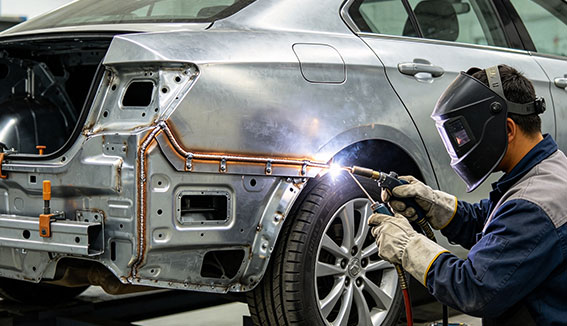
One independent collision repair workshop experienced recurring heat-related issues during conventional MIG welding.
Rather than replacing equipment, the workshop worked with XINXIN WELDING to evaluate whether a different filler metal
could provide a better solution.
Project Background
Industry: Automotive Collision Repair
Location: Central Europe
Vehicle Type: Mid-size passenger vehicles and SUVs
Repair Scope: Replacement and joining of galvanized outer body panels
Typical components included door outer panels, quarter panels, wheel arch sections, roof skins and rear body panels.
Most joints involved galvanized steel between 0.7 mm and 1.0 mm thick.
Existing Repair Process
The workshop used conventional MIG welding with carbon steel wire and an Ar/CO₂ shielding gas mixture. Despite
optimizing welding parameters, technicians continued to experience damage to the zinc coating, panel distortion, excessive
finishing work and rising repair costs.
Engineering Evaluation
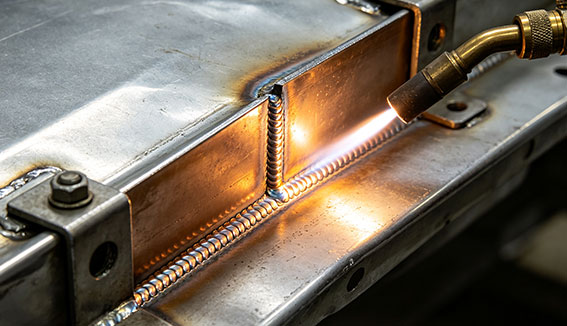
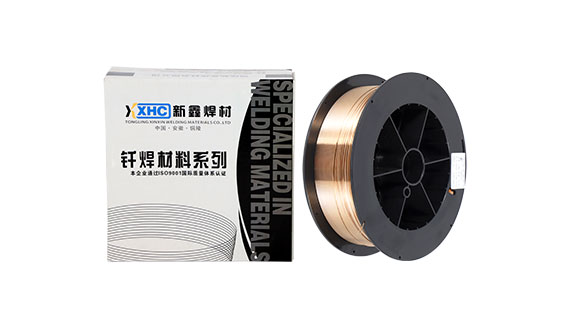
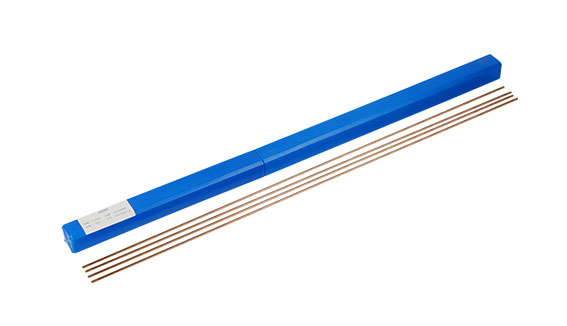
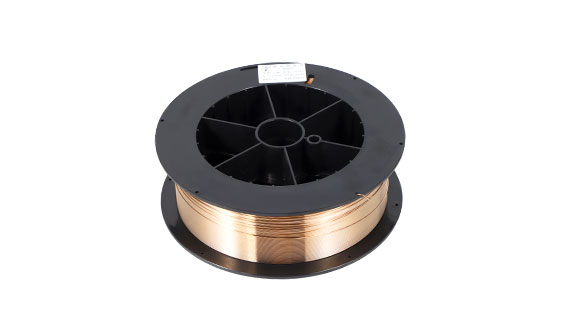
XINXIN WELDING recommended evaluating CuSi-A Silicon Bronze Welding Wire (AWS A5.7 ERCuSi-A) using a MIG
brazing process with 100% argon shielding gas. The existing MIG equipment was retained and only minor parameter
adjustments were required.
Trial Results
• Better preservation of the galvanized coating due to lower heat input.
• Reduced distortion on thin sheet metal.
• Cleaner brazed joints with minimal spatter.
• Less grinding before painting.
• Improved workshop productivity through shorter repair cycles.
Why CuSi-A Performs Differently
Unlike conventional steel welding, MIG brazing with CuSi-A melts the silicon bronze filler while exposing the surrounding
galvanized steel to significantly lower thermal stress. For suitable applications specified or approved by vehicle manufacturers,
this helps preserve corrosion protection while producing clean, consistent joints.
Why Choose XINXIN WELDING
XINXIN WELDING manufactures CuSi-A Silicon Bronze Welding Wire using high-purity raw materials and strict quality
control. Every production batch is inspected for chemical composition, wire diameter, feeding stability, arc performance and
brazing quality. OEM and private-label services are available.
Conclusion
For repair shops working with galvanized sheet steel, CuSi-A MIG brazing offers a practical solution for reducing heat
distortion, preserving corrosion protection and improving repair efficiency where the process is appropriate and follows vehicle
manufacturer repair procedures.
When a new batch of refrigeration units repeatedly failed the final pressure test, the production manager immediately
suspected the brazing rods.
The joints looked clean. The filler metal had melted evenly. Nothing appeared unusual. Yet nearly one out of every ten
copper-to-aluminum joints developed leaks during helium leak testing.
Replacing the brazing rods didn't solve the problem. Changing torch operators didn't help either. The factory was losing
production time, increasing rework costs, and struggling to identify the real cause.
Situations like this are more common than many manufacturers realize.
At XINXIN WELDING, we frequently receive inquiries from customers facing similar challenges. While every production
line is different, the root causes are often surprisingly similar.
Looking Beyond the Brazing Rod
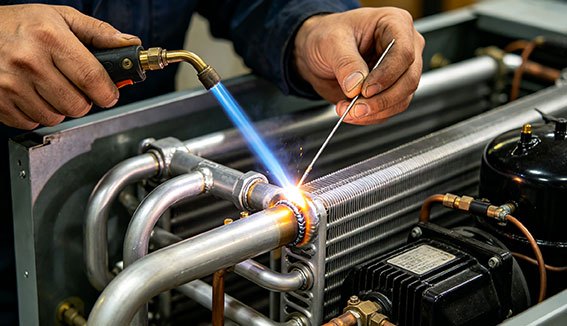
After reviewing the customer's brazing process, one detail immediately stood out. Operators were directing the flame
toward the flux-cored brazing rod instead of heating the copper and aluminum components first.
The filler rod melted quickly, creating what appeared to be a complete weld. However, because the base metals had
not reached the proper brazing temperature, the molten filler alloy could not fully wet the joint surfaces or flow through the
joint clearance by capillary action. The joint looked acceptable but contained microscopic voids that later became leakage
paths during pressure testing.
Engineer's Note
Never melt the filler rod directly with the flame. Heat the base metals first. The brazing alloy should melt from the heat
stored in the workpiece, ensuring complete wetting and proper capillary flow.
Why Copper and Aluminum Behave Differently
Copper conducts heat extremely quickly, while aluminum has a much lower melting point and is covered by a tenacious
oxide layer. This creates a narrow processing window. Too much heat may damage the aluminum before the filler flows. Too
little heat prevents proper metallurgical bonding.
A Small Process Change That Made a Big Difference
The customer cleaned every joint thoroughly, changed the heating sequence, and heated both base metals evenly
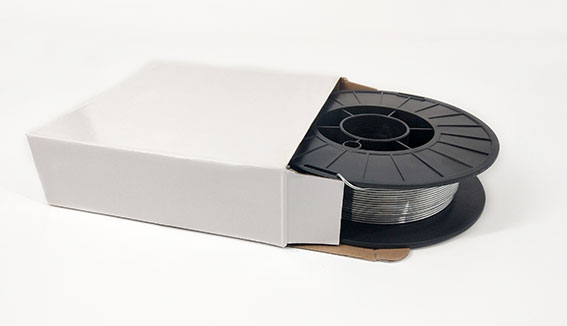
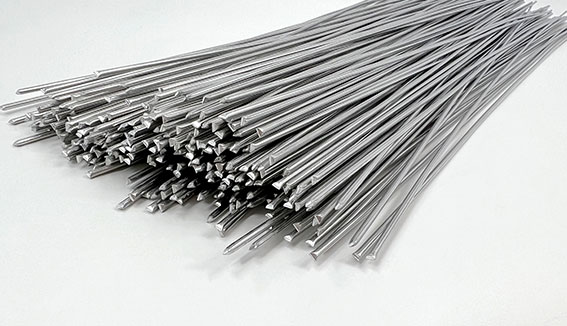
before feeding the flux-cored brazing rod. Once the joint reached the correct brazing temperature, the filler metal flowed
naturally into the joint by capillary action, producing dense, uniform brazed joints. Leak failures dropped dramatically.
Engineer's Note
Successful brazing is not about applying more heat. It is about applying heat evenly, in the correct sequence, and at
the proper temperature.
What Every Manufacturer Can Learn
Most copper-to-aluminum brazing defects are caused by five preventable issues:
• Heating the filler rod instead of the joint
• Overheating aluminum
• Poor surface preparation
• Feeding the filler alloy too early
• Uneven torch movement
Why Flux-Cored Brazing Rods Simplify Production
Flux-cored brazing rods eliminate the need for separate flux application, improve consistency, reduce operator error,
and produce strong, leak-resistant joints when used with the correct brazing process.
How XINXIN WELDING Supports Manufacturers
At Tongling Xinxin Welding Materials Co., Ltd., we believe successful brazing comes from combining high-quality filler
materials with proven process control. Our engineering team works with customers to reduce defects, improve productivity,
and optimize copper-to-aluminum brazing applications.
Conclusion
Our goal is not simply to supply brazing consumables. We help manufacturers solve brazing problems and build stronger,
cleaner, and more reliable brazed joints.
As extreme rainfall events lead to frequent urban flooding, the limitations of traditional drainage methods have become a critical bottleneck. Conventional vehicle-mounted pumps struggle with inaccessible terrains, manual deployment is slow and carries high risks of electrocution or structural collapse, and electric pumps are prone to short-circuiting in submerged environments. These challenges lead to missed windows for effective flood mitigation.
The Selamhyd Remote Control Flood Drainage Robot represents a disruptive innovation in emergency drainage. By integrating a tracked chassis for all-terrain mobility, a high-stability hydraulic system, and unmanned remote operation, it shatters traditional bottlenecks across three dimensions: deployment, operation, and safety.
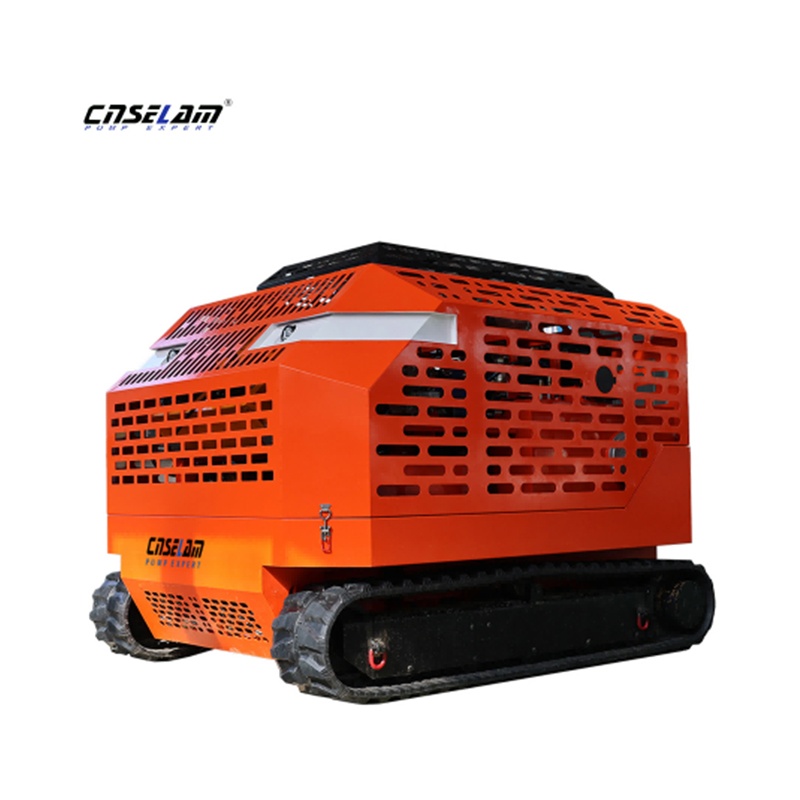
1.Precision Access: Eliminating Deployment Delays
One of the core advantages of this tracked intelligent drainage equipment is its ability to solve the "last mile" accessibility problem. When tunnels are submerged or main roads are blocked by debris and thick sludge, standard trailer pumps must remain in safe zones, significantly reducing suction efficiency.
Equipped with a reinforced Crawler slurry drainage equipment chassis, this robot features a wide-track design that minimizes ground pressure. It can traverse deep water, thick mud, and gravel piles, climbing steep slopes and crossing obstacles without the need for manual path clearing. Compared to traditional setups, it reduces pre-operation preparation time by over 70%, turning "waiting for deployment" into "immediate activation."
2.Hydraulic Power: Non-Stop Operation in Harsh Conditions
The true efficiency of the robot lies in its Large flow hydraulic sewage pump. Floodwaters are often laden with rocks, vegetation, and heavy silt. While electric pumps often fail due to clogging or short circuits, the Hydraulic slurry pump is engineered for the most punishing conditions.
Durability: The wear-resistant pump body handles high-solid-content water without interruption.
Instant Start: As a Self-priming intelligent drainage robot, it eliminates the tedious manual priming process. Once on-site, it begins suction immediately via remote command.
3.Unmanned Operation: Safety-Driven Speed
Safety concerns often slow down manual operations. The Remote Control Flood Drainage Robot allows operators to remain in a safe zone, controlled from a distance. This removes the need for time-consuming on-site risk assessments for personnel, ensuring that the Intelligent drainage equipment can work continuously and safely through the night or in unstable environments.
From routine municipal pipe maintenance to the demanding requirements of Pumped storage equipment, professionals face a consistent set of challenges: high-viscosity sludge, confined spaces, and the need for high-head performance. Traditional equipment often lacks the power for deep-well lifts or the compact footprint required for narrow urban alleys.
Finding the right Large flow hydraulic submersible pump is about matching the equipment to the specific environmental constraints of the project.
1. The Portable Solution for Confined Municipal Spaces
In narrow alleys or basement corners where heavy machinery cannot enter, the Portable hydraulic sewage pump is the preferred choice. Its modular, lightweight design allows 2–3 workers to deploy the unit without heavy lifting gear. Despite its size, when integrated into Portable intelligent drainage equipment, it delivers high-performance suction that handles high-solid-content municipal sludge with ease, solving the dilemma of "small equipment lacking power."
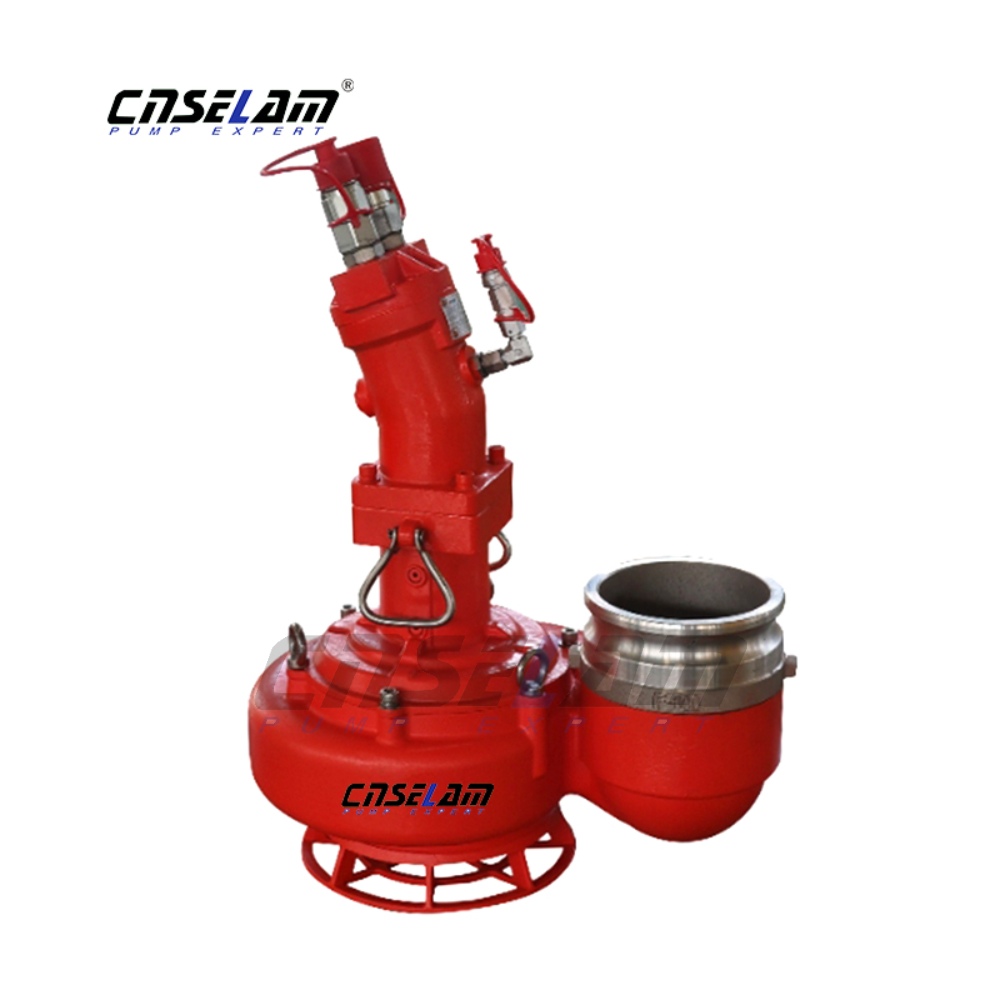
2. High-Head Performance for Pumped Storage and Deep Wells
For Pumped storage tools and deep-well maintenance, the requirements for lift (head) and flow are grueling. The High head hydraulic slurry pump is specifically engineered for these high-difficulty tasks.
Vertical Lift: Its multi-stage impeller design lifts high-viscosity slurry from deep shafts to the surface effortlessly.
Scale: The Large flow hydraulic pumping machinery ensures massive volumes of water are transferred rapidly, matching the operational tempo of pumped storage power stations.
3. Precision Robotics for Small-Diameter Pipes
For pipes where human entry is impossible, the Mini hydraulic drainage robot offers a "micro-invasive" solution. Equipped with a Hydraulic suction pump and high-definition vision systems, it navigates small-diameter pipes to remove blockages without the need for costly excavation or road repairs.
4. Submerged Efficiency: Harbor and Reservoir Maintenance
For harbor dredging and reservoir upkeep, the combination of an Underwater intelligent drainage robot and a Large flow hydraulic axial flow pump is revolutionary. It allows for continuous underwater clearing without draining the site or building cofferdams, significantly reducing operational costs and environmental impact.
Whether it is a Flood control hydraulic machine for emergencies or a Large flow hydraulic trash pump for industrial waste, the hydraulic advantage lies in its power-to-weight ratio and reliability.
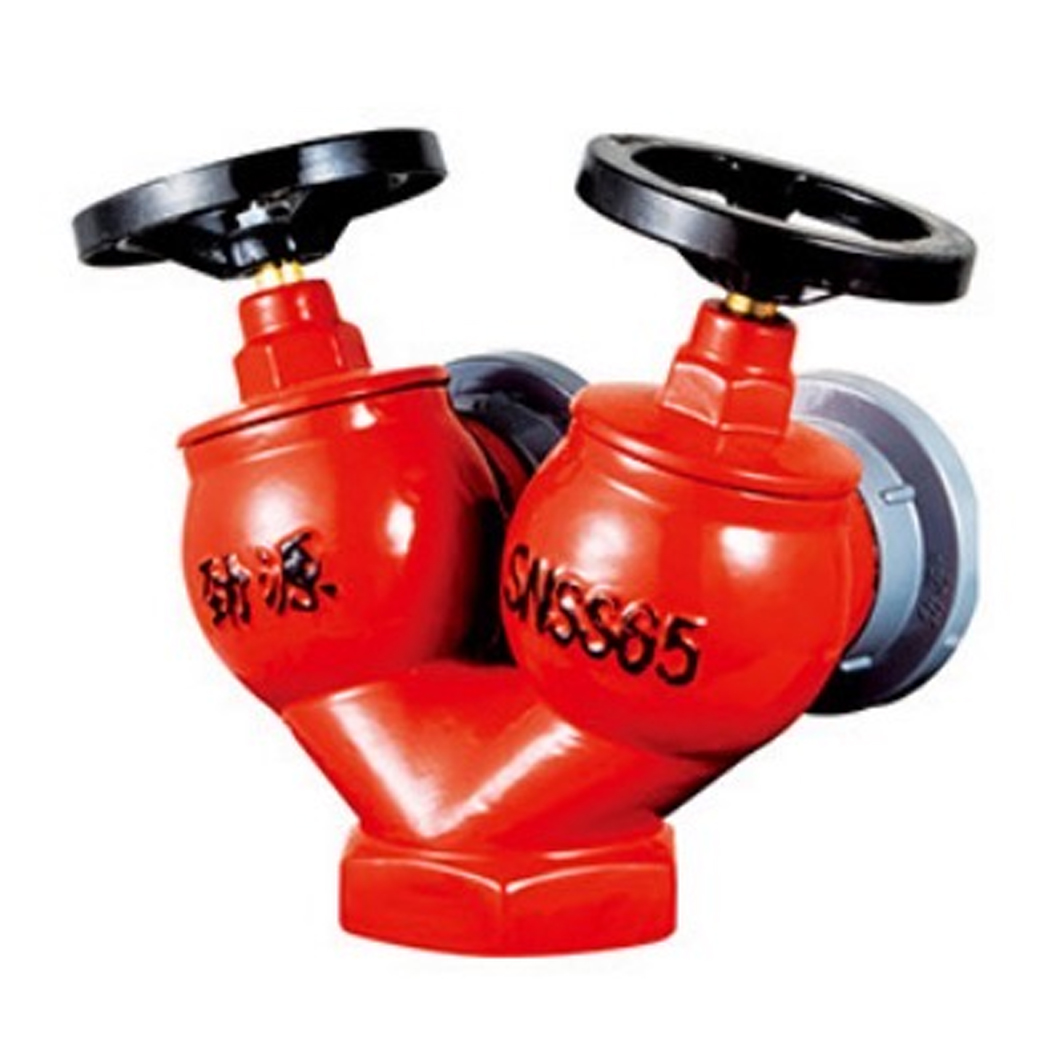
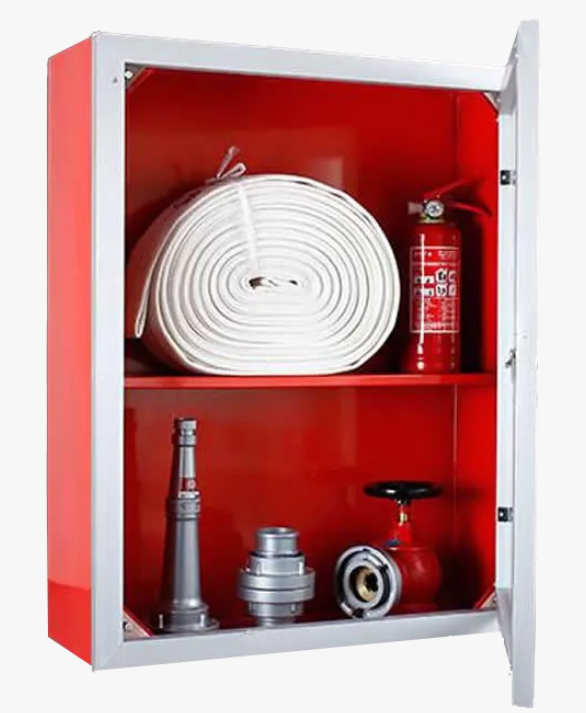
What Is a Fire Hydrant?
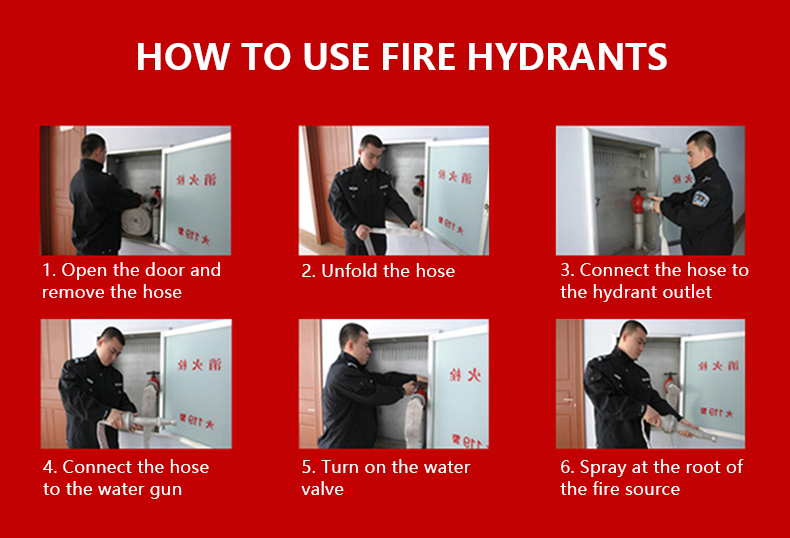
Choosing the right Plastic Pelletizer Knife for your underwater pelletizing system is a critical decision that directly impacts pellet quality, downtime, and long-term operational costs. While many materials exist, Tungsten Carbide (WC) and Titanium-based alloys (often with specialized coatings) stand out as the industry titans.
Tungsten Carbide: The Workhorse of Hardness
Tungsten Carbide remains the "gold standard" for high-volume production. Its primary advantage is extreme hardness and wear resistance. If you are processing abrasive resins like glass-filled polymers or high-density polyethylene (HDPE), WC blades maintain a sharp cutting edge for extended periods. This precision ensures a uniform "spherical" shape and minimizes the production of fines or dust. However, their brittleness makes them susceptible to chipping if the pelletizer plate is misaligned or if foreign metal debris enters the water box.
Titanium & Advanced Alloys: The Specialized Contenders
Titanium-based blades, often utilized with Cermet or specialized TiN (Titanium Nitride) coatings, offer a different set of benefits. Their standout feature is corrosion resistance and toughness. For production lines handling chemically aggressive materials or biodegradable plastics, titanium-based solutions prevent premature blade degradation caused by chemical reactions. While slightly less hard than pure WC, they are less prone to catastrophic fracturing under thermal shock or mechanical impact.
To determine the best fit, consider these factors:
Material Abrasiveness: High abrasion favors Tungsten Carbide.
Chemical Environment: Corrosive additives favor Titanium alloys.
Maintenance Strategy: If your operators are prone to aggressive "starting" procedures, the toughness of Titanium might save you from frequent blade replacements.
Ultimately, the goal is to balance the hardness required for a clean cut with the durability needed to survive your specific production environment. Investing in the right metallurgy today is the best way to ensure a seamless, "no-clog" tomorrow.
The Importance of High-Quality Shredder Knives in Industrial Applications
In today's industrial landscape, efficient material processing is crucial for productivity and cost-effectiveness. One essential component in this process is shredder knives, which play a vital role in recycling, waste management, and various manufacturing industries. High-quality shredder blades ensure precision cutting, durability, and superior performance, making them indispensable for businesses that require reliable shredding solutions.
Why Choose Premium Shredder Knives?
The efficiency of shredding machines heavily depends on the quality of their blades. Using substandard shredder knives can lead to frequent replacements, increased downtime, and higher operational costs. At Ma'anshan Licheng Blade Manufacturing Co., Ltd., we understand these challenges and provide top-tier shredder blades designed for longevity and high performance. Our blades are crafted from premium imported materials and undergo rigorous quality control to meet the highest industry standards.
Applications of Shredder Blades
Our shredder knives are widely used in industries such as:
-
Recycling & Waste Management – Ideal for processing plastics, metals, and other recyclable materials.
-
Packaging & Printing – Ensuring precision cuts for paper, cardboard, and flexible packaging materials.
-
Textile & Fiber Industry – Effective in cutting fabrics, non-woven materials, and industrial fibers.
-
Food Processing – Providing hygienic and precise cutting solutions for various food products.
Additionally, our slitting knife products are widely applied in film cutting, rubber processing, and tape slitting, ensuring clean and precise cuts with minimal waste.
Ma'anshan Licheng Blade’s Competitive Edge
As a leading manufacturer with years of experience, Ma'anshan Licheng Blade Manufacturing Co., Ltd. offers a comprehensive selection of over 400 blade types, ensuring that we meet the diverse needs of our customers. Our advantages include:
-
Superior Material Selection – We use high-quality imported materials to ensure durability and resistance to wear.
-
Comprehensive Product Range – From shredder knives to slitting knife solutions, we provide customized options for various industries.
-
Global Export & Trusted Reputation – Our products are exported to Japan, South Korea, Hong Kong, and South Asia, earning widespread recognition.
-
Customer-Centric Services – We offer tailored solutions, technical support, and after-sales services to ensure customer satisfaction.
If you are looking for premium shredder knives, shredder blades, or slitting knife solutions, Ma'anshan Licheng Blade is your trusted partner. Contact us today to explore how our products can enhance your industrial operations.
1. Understand Your Application Requirements: Pitch, Current, and Space
2. Prioritize Quality and Compliance: The Foundation of Long-Term Cooperation
3. Customization Capability: Adapt to Your Unique Needs
4. Why Choose Aichie Tech as Your Connector Harness Partner?
Conclusion
Welcome Inquiries
For more information, please feel free to contact Aichie Tech Electronics Co Ltd.
Email:sales03@aichie.com
Tel/Whatsapp: +86 18027502150